No voice is raised for the little boys, none for the little girls, no change for them save to the hospital, the grave, Heaven.
Chris Lennon
- Tuesday November 17, 2026
- 10:30 – 12:30
- Newtownpark Pastoral Centre (map)
The nineteenth century was a period of profound change in how children were viewed in contemporary society. Universal education at elementary level saw many children removed from the labour market; the importance of leisure, play-time and exercise for the health of children became more widely recognised, particularly by middle class parents; and literacy and numeracy became important skills to be acquired by all children, whatever their gender. Such changes were much slower among the poorer classes.
Poor Law Act Ireland 1838 was based on the Poor Law Amendment Act 1834 which introduced a new system of poor relief for England and Wales. Relief for the poor and destitute was to be provided by a local poor rate to be paid by the landowners of a locality. Relief would only be available to those willing to enter the local workhouse. The country was divided up into 130 Unions. Each union served the local population and were expected to establish a school for the children who were inmates. These schools were usually connected with the Commissioners for National Education, who, since 1832 had been establishing an elementary school system around the country. By 1842, most Unions were established with a workhouse built, and schools established.
Rathdown Poor Law Union was established in August 1839, covering an area of 75 square miles and including parts of both Dublin and Wicklow. There were ten electoral divisions in the Union.: Blackrock, Dundrum, Glencullen, Killiney, Kingstown (Dun Laoghaire), Rathmichael, Stillorgan, Powerscourt and Delgany. The workhouse was built on an eight acre site at Loughlinstown and is presently better known as St. Columcill’s Hospital .
My research looks at the schools in three Unions, including this one, alongside the other schools established in the area. One of the aims of the research is to investigate as far as possible the lives and experiences of children both inside and outside the workhouse. The lives of children and their teachers are examined from 1840 – 1850. This decade was specifically chosen as it includes the most severe years of the Great Irish Famine (1846-1850) , which were , therefore, the most challenging for the workhouses.
Rathdown was one of the few Poor Law Unions to avoid a significant decline in population between 1841 and 1851. Unlike many other Poor Law Unions, Rathdown seemed to have a relatively conscientious group of Guardians who paid attention to the children under their care. In this talk, I will outline some of the conditions which the children endured under their guidance and that of the teachers who were employed by them. Of particular interest, is the medical officer of Rathdown Poor Law Union, Dr. Thomas Darby, who was a regular advocate for the children in the workhouse, and lived in Bray. He was appointed in 1839 as medical officer to the Union and remained in that post until a few years before his death in 1886.
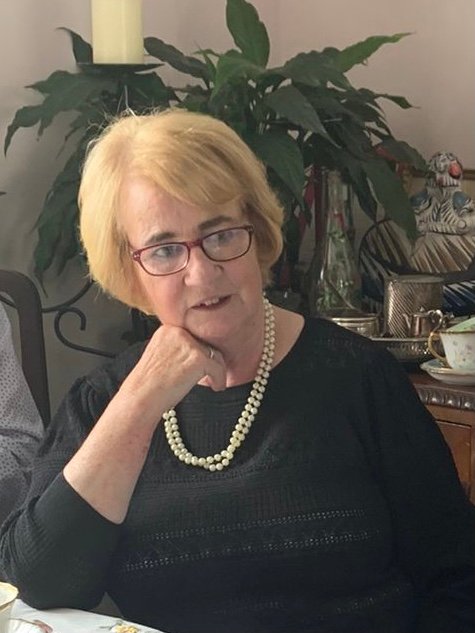
Chris Lennon has lived in Bray for the last 50 years although born and brought up in North Dublin. She two sons and six grandchildren all living in the area and so am closely involved with their lives.I am a retired primary school principal, having spent the last 18 years of my teaching career as principal of Dalkey School Project National School.
She returned to the study of history and completed a B.A. in History and English in UCD in the early 70s, and a M.Ed shortly before retiring. I retired in 2009, and began research for a Ph.D in the history of education shortly afterwards.
Her research has centred around Irish education in the 19th century, particularly on the effects of the Famine on schools and children. Her PhD work was a study of national schools in three Poor Law Unions: Loughrea, Roscrea and our own local Poor Law Union, Rathdown.
More recently, she has been researching the Earl Grey Scheme of assisted emigration, 1848-1850, through which young orphan girls were sent from workhouses to Australia.